


Еl camino
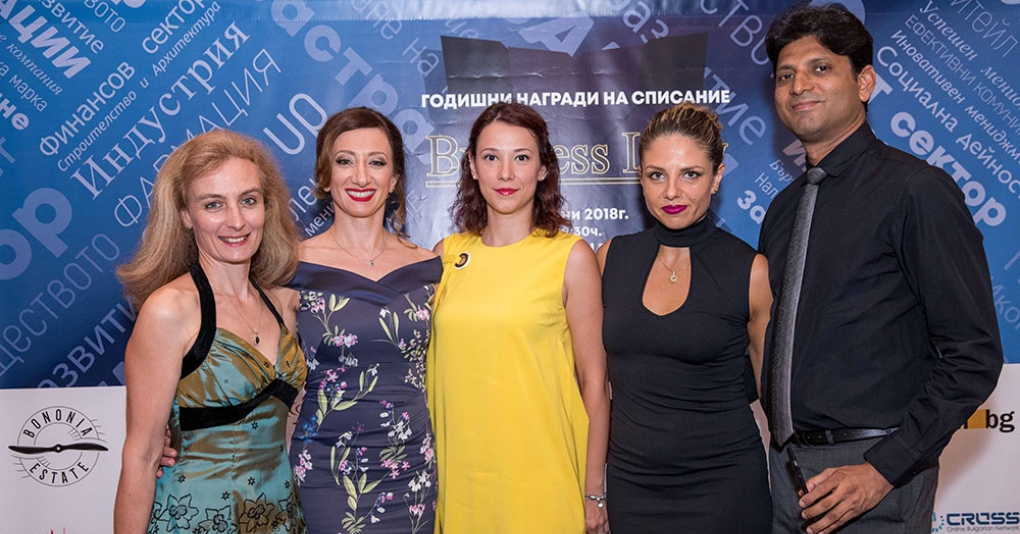
Eng. Maria Krasteva is the honorary president of the "Business Lady Club". Master in nuclear electronics and measuring technology, a private consultant on radiation backgrounds, and owner of shops for orthopedic shoes and insoles. She representative in Bulgaria three orthopedic insoles brands and cosmetics for shoes. Organizer and supporter of numerous campaigns for the prevention and fight against cancer. Passionate traveler and travel blogger.
I like to travel the world. I love the stories and little details about buildings, cities, and countries that you can't learn from articles and movies. I want to see and taste everything: museums, star hotels, restaurants, street food, crowd, and markets. Traveling makes me feel alive.
This time I will talk about El Camino, the way of the pilgrims, or rather the way to oneself. I'm not pious, but as grandfather Bishop Nikolay told me years ago, "we are not pious, we are believers". I am a believer that good things should be done; that it is good and evil in each of us, but it is more important which you provoke, what you would take out person. El Camino is a test of both the spirit and the body. This was not an excursion, for me it was the road and me. You may walk in a group, and talk to each other, but most of the time you only communicate with your thoughts.
Now some facts and history. In 1987, Camin became the first European cultural route to be declared by the Council of Europe, and in 1993 it entered the UNESCO World Cultural Heritage List. Three are the most visited pilgrimage Catholic routes in the world - Jerusalem, Rome, and Santiago de Compostela, called El Camino. It is an ancient pilgrimage network of roads, the terminus of which is the Cathedral of Santiago de Compostela. The most popular of them is a French route that starts from a small village in France - Saint Jean Pierdeau Port. There are also other routes such as the Northern, English, Portuguese, etc. You can cover it on foot, on horseback, or by bike. Nowadays, even if you go 100 km. on foot or 200 by bike, you are a pilgrim and you receive a certificate at the final point of the road, the Cathedral of Santiago de Compostela. The certificate has been issued since the Middle Ages and has been preserved with the same text to this day. The sacred path of Caminose was glorified in the 12th century by the Castilian and Aragonese monarchs. Then the militant, religious Order of Santiago was created by a group of Castilian knights. Its purpose is to assist and protect pilgrims.
It is said that in Spain, in the cathedral of Santiago de Compostela, the relics of Saint James Zebedee-Santiago are kept. Saint James is one of the twelve apostles of Jesus Christ. He is the brother of Christ's beloved disciple, the holy apostle and evangelist John the Theologian. The two brothers were born and raised in a righteous Jewish family. They were fishermen. The family was wealthy. Father Zebedee not only had his fishing vessel but also used and hired fishermen-boatmen. Their mother, Salome, was one of the first women to believe in Christ. She often accompanied Christ on his travels through Palestine. She helped with material means. She was a witness to the sufferings on the cross, the death, and the burial of Christ. She was in the group of myrrh-bearing women who - according to the Gavash custom - on the first day of the week (Sunday) went early to the tomb to anoint the body of Christ with perfumes. St. James had violent arguments with Christ and the other apostles, that's why he was called the "Son of Thunder". King Herod cut him down with a sword in 44. and so Jacob Zebedee was the first martyr for the faith of the twelve apostles. According to legend, two of his disciples, Athanasius and Theodore, carried his body by boat from Jerusalem across the Mediterranean to Galicia, where they buried him, but the exact location has been forgotten over the centuries. Santiago's tomb was accidentally discovered in the 19th century by the hermit Pelagius. Claiming that God was leading him, he was only following the path illuminated by an unusually bright star. Hence the name of the Compostela award - "Field of the Star". The capital of Chile, Santiago de Chile, is named in honor of the apostle James, as well as many cities on the Iberian Peninsula and in Latin America.
There are three main symbols of St. Jacob's Way – a cudgel, a seashell, and a water gourd. They are also depicted on the modern pilgrim passport. The cudgel and water gourd have now been replaced by hiking poles and bottles, but the seashell is unchanged. The first pilgrims used it for scooping or as a plate for food. On the way, you could ask for food from anyone who collects clams, and no one had the right to refuse. They used to wear it on their hats as an insignia, and now it's on their backpacks. The seashell leads you all the way, you will see it on the road, on the walls of the houses, follow it. Even if you get lost, the local people will guide you. There are many legends about how it became a symbol. St. Jacob saved a drowning nobleman when he brought him to the shore, he was covered all over with shells. Another version is that during the boat transfer, the relics of St. Jacob fell into the water and after a while, the tide carried them ashore. They were fully preserved because the shells covered them. There is another legend, unrelated to the clams, that Jacob's mortal remains were carried on a cart drawn by wild buffaloes, which were tamed with only one baptism. Many people think that the seashell is a symbol because of the lines that look like rays and come together at the base and, like the many roads that come together in the cathedral of Santiago de Compostela. It is believed that the seashell is not only a symbol, it is the protection of the Saint on the El Camino road.
When setting off on El Camino Road, forget luxury, make-up, and hairstyles. Take SPF 50 sunscreen, at least two pairs of comfortable shoes, 2-3 pairs of pants, 2-3 t-shirts, a soft sweater, a jacket, 3-4 pairs of socks and underwear, a scarf, a long raincoat, a flashlight, soap, safety needles, some medicine, water 2 bottles of 500 ml. There are many fountains with good water along the way. The backpack should not weigh more than 5-6 kilograms. Don't forget to get a pilgrim passport and stamp from the place you have chosen to go. Then, every day, collect one stamp, because the stamps show how long you have walked the road, and in the albergues themselves, look at the last stamp.
This is not a path for the faint-hearted, but it is worth every step and every adversity. You sleep in special huts called albergues, located in villages 20-25 km away. You will recognize them by the bronze shell. The price of the night is symbolic from 3 to 15 euros, either free of charge or by donating as much as you like. There are bunk beds in the bedrooms for more people. You can cook or eat in the village.
About 3km away from the finish you will see the Cathedral of Santiago de Compostela for the first time.
The Cathedral of Santiago de Compostela was begun in 1075 by King Alfonso VI, replacing the 9th-century basilica, which was looted and destroyed by the Moors, and the bells were taken to Cordoba. It was completed in 1211. Having been enriched from both inside and out over the centuries. The Baroque facade, called the Obradoiro facade, was added by local architect Fernando Casas in the mid-18th century. It covers and protects the original Gate of Glory carved from stone in 1188 by Master Matteo. The Gate of Glory is considered one of the most beautiful works of the Middle Ages. Dimples have formed in the stones from the touches of pilgrims all these years.
The interior is Romanesque with two corridors and vaulted ceilings, with many chapels. Before the altar, it was Romanesque, but it was replaced by a Baroque one made by Domingo Antonio de Andrade. On the main altar, St. James is depicted in three ways as a teacher of Christ's faith, as a worshiper, and as a slayer of the Moors. Right under the altar in a silver casket lay the relics of St. James. the cherished goal of every pilgrim.
El Camino is a choice, it's not buildings, it's not a classic excursion, and it's not exactly history. Maybe it's an adventure. I've only walked 100km. The truth is that El Camino is ahead of me. I'll finish this story as always. I think that money is best spent to get to know new places, history, legends, and life. Buy memories and experiences, no one can take them from you, you can only share them. To enrich the knowledge of other people, but they do not diminish and always remain yours, to warm your soul.